





Paper Tubes vs Plastic Tubes for Cosmetics & Personal Care (2026 Buyer's Guide)
Short answer: For firm, solid stick cosmetics — lip balm, deodorant, body balm — paper tubes are usually a strong choice: they reduce plastic per unit, print well and avoid new molds. Plastic tubes still suit soft, high-oil or liquid formulas. Test paper with your formula first, and match claims to the actual bill of materials.
For decades, the plastic twist-up stick has been the default package for lip balm, deodorant and solid skincare. That default is changing. Plastic taxes, extended producer responsibility (EPR) fees, the EU Packaging and Packaging Waste Regulation (PPWR) and shifting consumer expectations are pushing brand owners and packaging buyers to ask a simple question: should our next stick product go into a paper tube or a plastic tube?
This guide from Nextruct, a paper packaging engineer with 14 years of experience serving makeup, personal care and wellness brands in Europe and North America, compares custom paper tube packaging with plastic tubes for cosmetics side by side — also framed as paper tube packaging / paper tubes for cosmetics. It covers recyclability, weight, customization, barrier and formula compatibility, cost drivers, regulation and brand perception — and ends with a decision framework you can use for your own range.
Key Terms, Defined
Before comparing, it helps to be precise about what we mean.
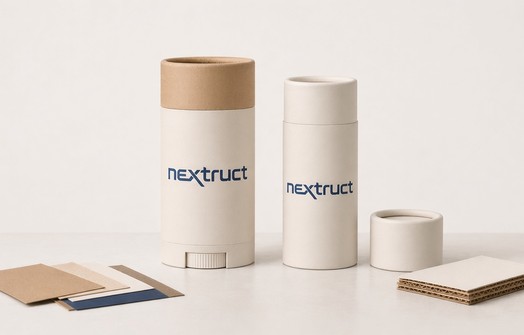
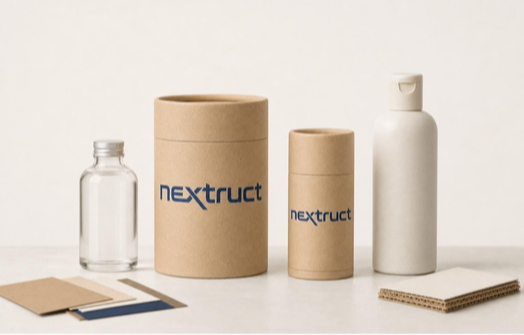
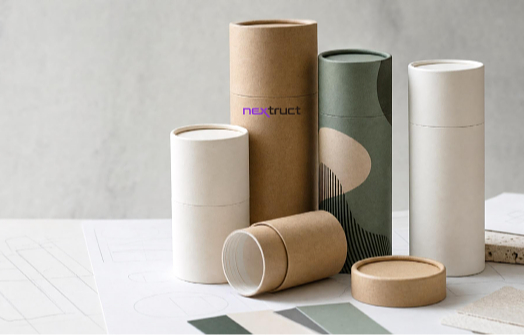
- Paper tube: A cylindrical or oval container whose main structure is made from wound or formed paperboard. In cosmetics, paper tubes are used for lip balm, deodorant, body balm, solid perfume and sunscreen sticks, as well as for loose items such as pre-rolls or supplements.
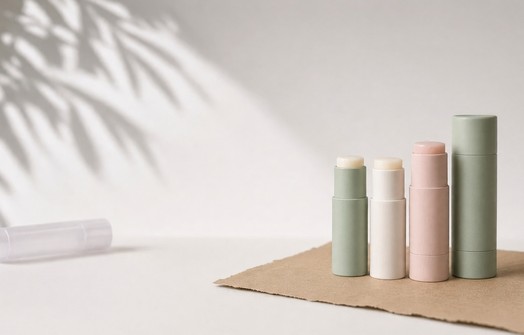
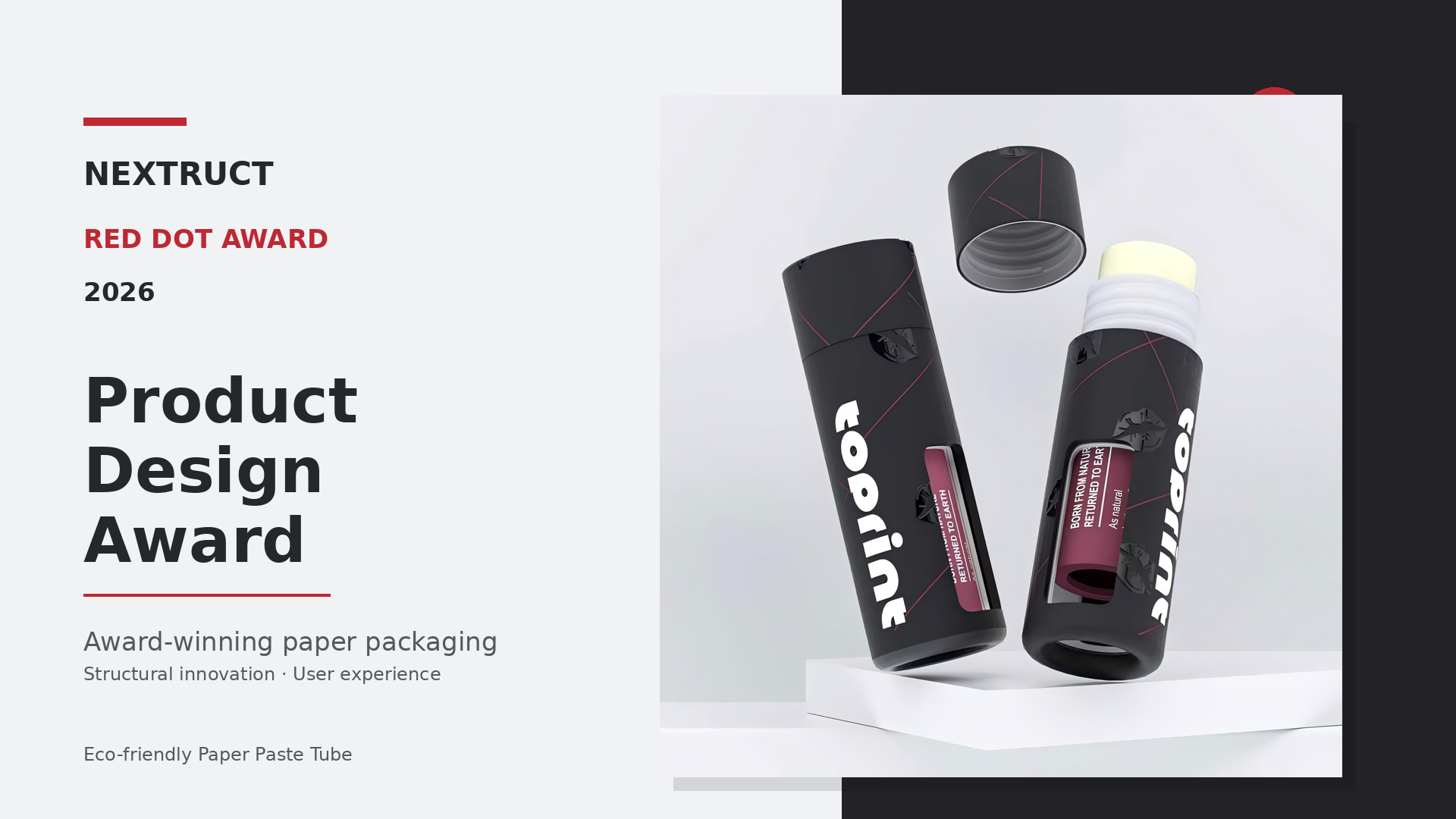
- Paper-forward stick tube: A stick format whose inner and outer tube are FSC-certified paper, framed for plastic-reduction programs. Our FSC Push-Up Paper Lip Balm Tube uses an FSC paper inner and outer tube. Any inner-wall wax, coating or adhesive should be confirmed with Nextruct for your SKU — so we do not claim plastic-free, 100% paper or all-paper on that page.
- Paper-based / plastic-reduced (hybrid) tube: A hybrid tube with a paper body and functional plastic parts — for example a PP inner core, dust cover or plastic base — where the mechanism requires it. Our Oval Paper Deodorant Tube is built this way (reduced plastic; not plastic-free).
- Plastic tube (stick): A container molded mainly from PP, PE or similar polymers, usually with a twist or push mechanism.
- PCR plastic: Post-consumer recycled plastic, such as PCR-PP. It reduces virgin plastic use but is still plastic.
- Push-up vs. twist-up: Push-up tubes are dispensed by pressing the base upward; twist-up tubes use a rotating mechanism. See our guide Twist-Up vs Push-Up Paper Tubes.
- FSC certification: Forest Stewardship Council certification showing paper fiber comes from responsibly managed sources with documented chain of custody.
- PPWR: The EU Packaging and Packaging Waste Regulation, which applies from August 2026 and introduces phased requirements on recyclability, recycled content, packaging minimization and labeling.
Paper Tubes vs Plastic Tubes: Comparison Table
| Factor | Paper tubes | Plastic tubes |
|---|---|---|
| Main material | FSC-certified paperboard, sometimes with liners or a small plastic component | PP, PE or other polymers; may include PCR content |
| Recyclability | Paper body can go into paper recycling streams where accepted; easiest when components separate cleanly or secondary materials are confirmed per SKU with Nextruct | Technically recyclable in some systems, but small, mixed-polymer sticks are often not captured or sorted |
| Plastic per unit | Reduced (paper-forward stick or paper body + functional plastic parts such as a PP core, dust cover or base) — exact savings depend on the locked configuration; confirm with Nextruct | High — the whole structure is plastic |
| Weight | Lightweight | Lightweight; comparable or slightly heavier depending on wall thickness |
| Customization | Full-surface CMYK/Pantone printing, emboss, spot UV, matte, gloss; natural kraft or white looks | Printing, hot stamping, labels, colored resin; molds needed for new shapes |
| Barrier & compatibility | Good for firm, solid formulas; oils need liners or barrier treatment; water and humidity are key limits to validate in sampling | Strong moisture and oil barrier; suits soft, high-oil and liquid formulas |
| Mechanism | Push-up (simple) or twist-up (more engineering) | Twist-up mechanisms are mature and precise |
| Cost drivers | Paper grade, liner/barrier, print and finish complexity, tube size, volume | Resin price, PCR premium, mold tooling, decoration |
| Tooling for new shapes | Generally lower barrier to custom sizes and shapes | Injection molds required — higher upfront cost and lead time |
| Regulatory / PPWR angle | Paper structures can help brands prepare for recyclability requirements, plastic taxes and EPR fee modulation | Exposure to plastic taxes and EPR fees; small mixed-material plastic parts may face recyclability pressure |
| Brand perception | Strong sustainability signal; tactile, natural, premium potential | Familiar and functional; increasingly viewed as "default" rather than premium |
Where Paper Tubes Win
1. Plastic Reduction You Can Measure
Replacing a plastic stick with a paper tube reduces the plastic in each unit — from a paper-forward lip balm stick to a hybrid deodorant with a paper body and functional plastic parts. For a brand selling hundreds of thousands of units a year, that can add up to a reportable reduction in plastic weight — useful for ESG reporting, retailer scorecards and plastic tax calculations. Publish weight savings only after your configuration is locked with Nextruct.
2. A Clearer End-of-Life Story
Consumers understand "recycle with paper" far more easily than instructions for a small multi-material plastic stick. Paper-forward sticks, or hybrids where any plastic part separates easily, give you simpler on-pack guidance. Recycling acceptance still depends on local infrastructure and product residue, so phrase claims carefully.
3. Branding Freedom Without New Molds
Paper tubes can be printed across the entire surface with CMYK and Pantone colors — one reason cosmetic paper tubes work well for limited editions — and finished with embossing, spot UV, matte or gloss. Custom sizes and shapes such as oval profiles usually do not require new injection molds, which makes limited editions and range extensions easier.
4. Brand Perception and Shelf Differentiation
In a category where most sticks look alike, a paper tube stands out. The tactile surface signals craft, natural ingredients and environmental commitment — especially for clean beauty, natural deodorant and low-waste brands.
Where Plastic Tubes Still Have an Edge
An honest comparison has to acknowledge plastic's strengths:
- Moisture and oil barrier. Plastic handles soft, oily, water-containing or liquid formulas without liners.
- Mature twist mechanisms. Very fine, precise dispensing for thin lipsticks and soft balms is well established in plastic.
- High-humidity exposure. Products used in showers or stored in wet environments may need plastic's water resistance — validate paper options through sampling for your markets; we do not publish generic humidity-test conclusions here.
- Existing filling lines. Some high-speed filling lines are set up for plastic components and may need adjustment for paper.
Many of these gaps are narrowing. Oil-resistant liners, improved paper structures and hybrid designs — such as a paper body with a PP inner core and base — let brands reduce plastic while keeping function.
Ready to test paper for your range? See our FSC Push-Up Paper Lip Balm Tube and Oval Paper Deodorant Tube, then Get a quote or Request a sample.
Best For / Not Ideal For
Paper tubes are best for:
- Solid lip balms, tinted balms and lip butters
- Solid deodorants, especially natural and aluminum-free formulas
- Body balms, fragrance balms, moisturizer and massage sticks
- Brands with clean-beauty, natural or plastic-reduction positioning
- Limited editions, gift sets and seasonal launches needing custom print
- Brands selling into markets with plastic taxes or EPR fee pressure
- Trial, travel and full-size ladders in one format (e.g., 10–80 ml)
Paper tubes are not ideal for:
- Liquid, gel or very soft formulas without a suitable barrier
- Products stored in direct contact with water (e.g., in-shower use)
- Very slim, high-precision lipstick bullets that rely on tight twist tolerances (unless a specialist paper structure is developed)
- Projects with no time for sampling and compatibility testing
Plastic tubes remain a fit for:
- High-oil or soft formulas where barrier performance is critical
- Very high-speed filling lines that cannot be adapted in the project timeline
A Buyer Decision Framework for Stick Formats
Use these five questions to decide between paper, paper-based hybrid and plastic.
Step 1: What is your formula?
Firmness, melting point and oil content matter most. Firm, wax-rich balms and deodorants are usually strong candidates for paper. Soft or high-oil formulas may need an oil-resistant liner or a hybrid structure.
Step 2: Which dispensing mechanism do you need?
Push-up suits most balms and deodorants and keeps the structure simple. Twist-up offers finer control and suits slimmer sticks. Both are available in paper.
Step 3: What sustainability claim do you want to make?
- A "plastic-free" claim is only possible when every component, coating and adhesive is verified with no plastic. Confirm the full bill of materials with Nextruct for your SKU. Nextruct does not currently market the featured lip balm or deodorant landing pages as plastic-free.
- If you want "reduced plastic," "paper-forward" or "paper body," a paper inner/outer stick or a hybrid with a paper body and functional plastic parts (core, cover or base) can work and may offer more design flexibility.
- Always align claims with your actual bill of materials. Overclaiming is a real legal and reputational risk.
Step 4: Where will you sell?
EU markets bring PPWR obligations and national EPR schemes; some markets apply plastic packaging taxes. Paper-based packaging can help reduce exposure, but specific requirements depend on country and volume. Consult your compliance advisor and use our EU PPWR guide for beauty brands as a starting point. Treat PPWR language as high-level preparation guidance, not a compliance guarantee.
Step 5: What are your volume, budget and timeline?
Paper tube unit costs depend on paper grade, liner, print complexity, finishes and quantity. Plastic costs depend on resin, PCR premiums and tooling. For new shapes, paper often avoids injection mold investment. Build time for sampling into your launch plan. For MOQ and lead time on your configuration, confirm with Nextruct.
Concrete Scenarios
Scenario A — Natural lip balm brand, EU and UK. A brand selling a beeswax-based balm wants a strong plastic-reduction story. Recommendation: a push-up tube with an FSC paper inner and outer tube — paper-forward stick packaging such as Nextruct's FSC Push-Up Paper Lip Balm Tube — with matte finish and spot-UV logo. Keep claims at plastic-reduction / paper-forward until any inner-wall materials are confirmed with Nextruct.
Scenario B — Aluminum-free deodorant, North America. A DTC brand needs 15 ml trial and 75 ml full-size sticks with a distinctive look. Recommendation: Nextruct's Oval Paper Deodorant Tube — an FSC paper body with oil-resistant liner plus a PP inner core, dust cover and base (confirm materials and SKU details with Nextruct). Claims: "paper body, reduced plastic" — not plastic-free.
Scenario C — Soft tinted lip oil stick. The formula is soft with high oil content. Recommendation: test a barrier-lined paper structure first; if performance is not sufficient, a hybrid or plastic option may be the responsible choice for now.
Frequently Asked Questions
Are paper tubes really better for the environment than plastic tubes?
Paper tubes reduce plastic per unit and use renewable, FSC-certified fiber. Overall impact depends on materials, weight, transport and end-of-life. For most solid stick products, paper tubes are a strong plastic-reduction option.
Are paper tubes recyclable?
The paper body is designed for paper recycling streams where local facilities accept it. Paper-forward sticks are simplest when secondary materials are confirmed with Nextruct for your SKU; with hybrid designs, consumers should separate any plastic part.
Do paper tubes work with oily formulas like deodorant?
Yes, with the right structure. Oil-resistant liners help protect the paper wall. Always test with your formula during sampling.
Are paper tubes more expensive than plastic?
It depends on specification and volume. Paper may cost more per unit in some cases, but can avoid mold costs for new shapes and may reduce plastic tax or EPR exposure. Get a quote based on your specs.
Will paper tubes help with PPWR compliance?
Paper structures can support brands preparing for PPWR recyclability and packaging requirements, but compliance depends on your full packaging system and markets. Treat paper as part of a broader compliance plan — not an automatic pass.
Can paper tubes be fully customized?
Yes. Size, shape (round or oval), printing (CMYK, Pantone) and finishes (emboss, spot UV, matte, gloss) can all be customized.
What is the minimum order for custom paper tubes at Nextruct?
MOQ and lead time depend on tube size, print/finish and volume. Confirm with Nextruct for your configuration.
Work with Nextruct on Your Paper Tube Project
Nextruct (formerly Toprint) specializes in replacing plastic with engineered paper structures, from concept and structural design to sampling, production, quality control and global delivery. Our operations follow FSC, ISO and SA8000 standards, and paper tubes are our core product family.
If you are comparing paper and plastic for your next lip balm, deodorant or balm launch, send us your formula type, target capacity, markets and annual volume. We reply within 24 hours.
Get a quote | Request a sample
📧 info@nextructpackage.com | Contact us | Explore Nextruct