



Custom Paper Tube Packaging RFQ Checklist: Specs, Samples, Claims | Nextruct
Custom Paper Tube Packaging RFQ Checklist (2026 Buyer Guide)
For makeup, personal care, and wellness brands, a custom paper tube packaging project rarely fails on “wanting paper.” It fails when the RFQ is vague: diameter and height without fill volume, artwork without a bill of materials (BOM), or “plastic-free” language before anyone confirms whether a PP core, PCR-PP base, aluminum inner, or polymer dust cover is still in the stack.
This checklist is a practical companion to Nextruct’s longer note on custom paper tube packaging design and production. Use it to structure supplier questions, sample gates, and claim-safe wording before tooling and print lock. It complements - not repeats - our guides on paper tubes vs plastic tubes and hybrid vs all-paper deodorant tubes.
1. Lock the product brief before you ask for a quote
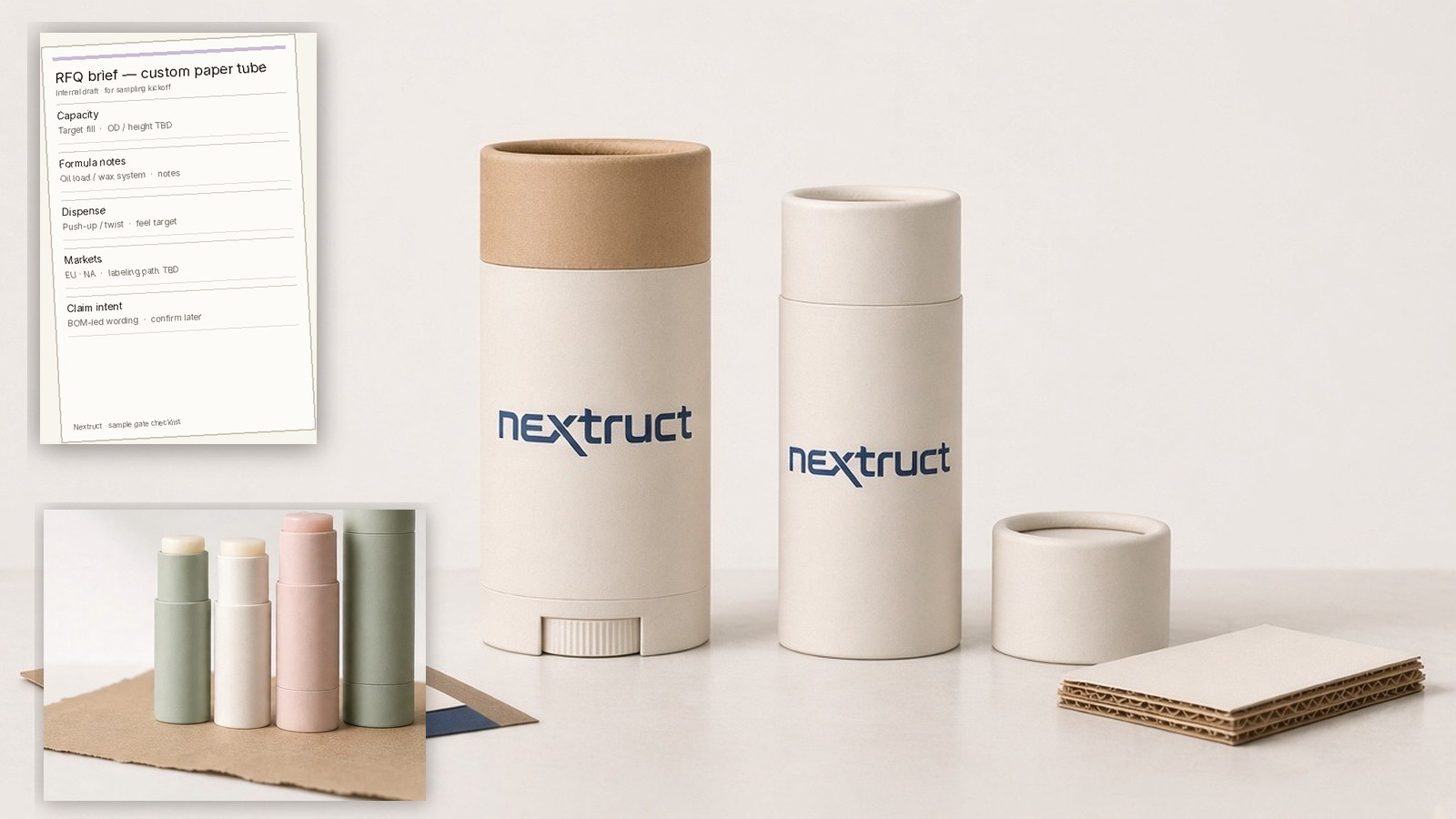
Send a one-page brief with the items below. Incomplete briefs produce incomplete lead times and mismatched samples.
- Category & ritual: lip balm, deodorant stick, lipstick, refill cartridge, or another stick/jar format.
- Fill volume / capacity band: grams or ml the filler will run - not only “looks like 50 g on shelf.”
- Formula notes: firmness, oils, wax level, and any humidity sensitivity you already know (ask for compatibility testing; do not assume one liner fits every base).
- Dispense feel: push-up vs twist-up vs screw-cap - mechanism choice is separate from paper-led vs hybrid materials.
- Markets: EU and/or North America first-ship destinations for recovery and claim review.
- Claim intent: plastic-reduction / hybrid / paper-led vs a confirmed all-paper goal only after full BOM clearance.
2. Specify structure, not only “a paper tube”
Ask the supplier to answer component by component:
- Paper body grade and wall build
- Liner / barrier identity (if any)
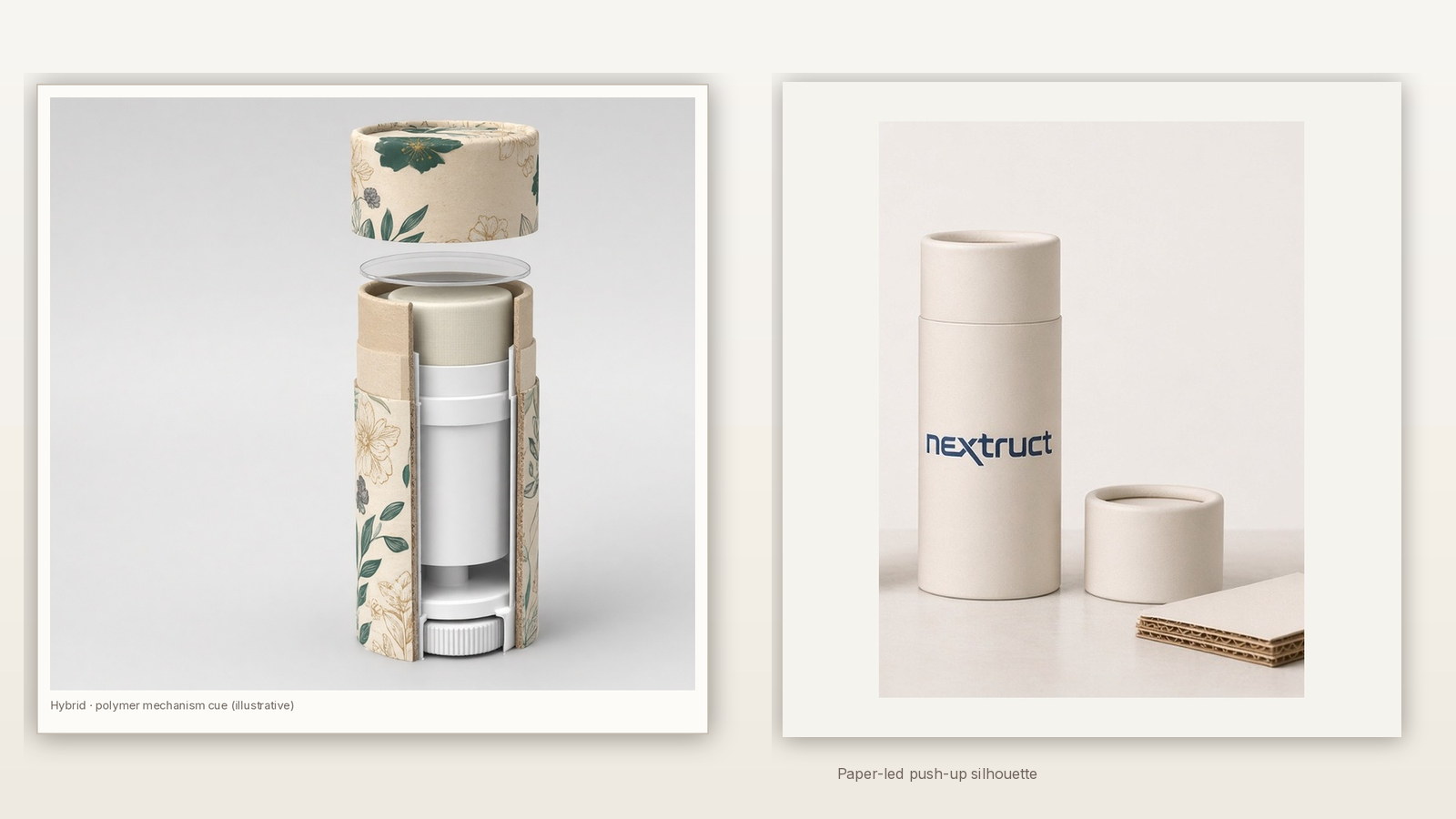
- Core, base, disc, or twist parts - and which are PP, PCR-PP, aluminum, or paper
- Cap / dust cover materials
- Adhesives and coatings that affect recovery claims
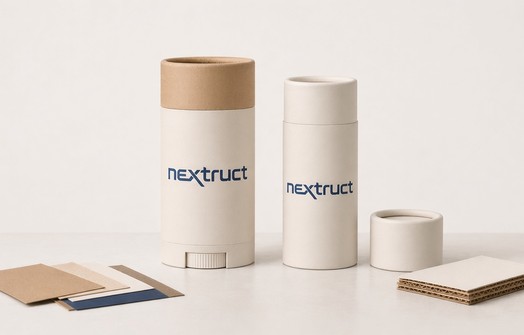
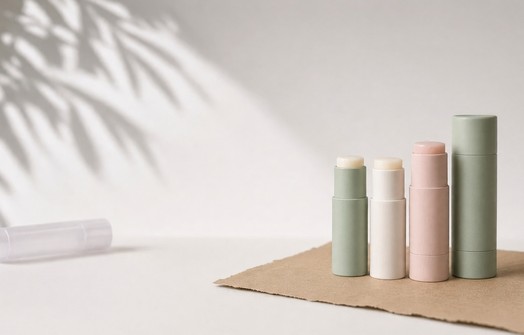
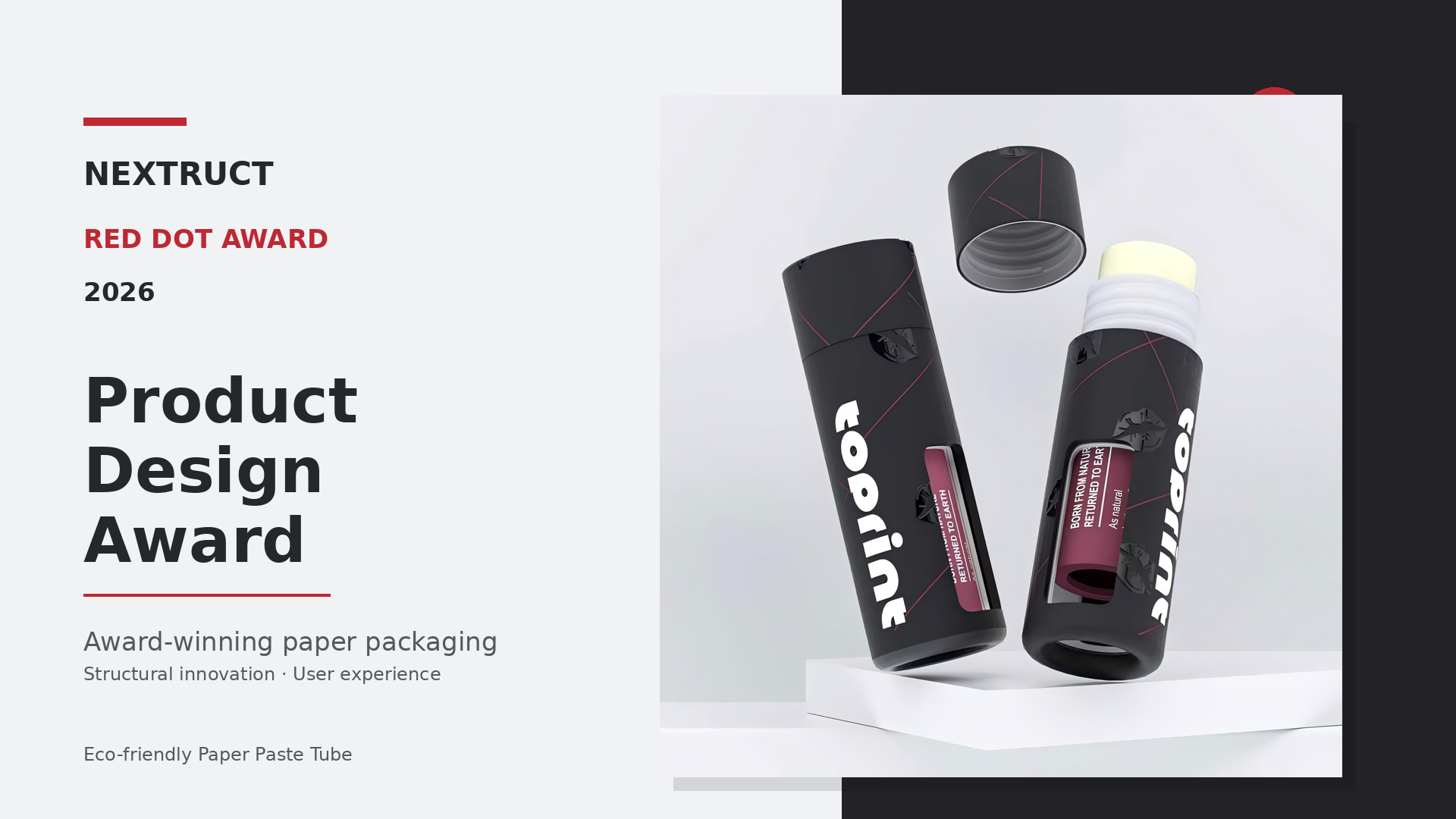
Catalogue pages are specification starting points. For example, Nextruct’s FSC push-up paper lip balm tube, twist-up deodorant tube with PP core, and 60 g kraft tube with PCR-PP base illustrate different stacks. Treat oval or PP-containing deodorant formats as hybrid or claim-pending until your project BOM is verified - never copy “plastic-free” from a URL slug into artwork.
3. Separate programme tiers from physical sampling
Buyers often collapse “how long?” into one number. Keep two clocks:
Programme tiers (public FAQ ranges, complexity-dependent): design typically 3-5 working days; digital proof typically 5-10 business days; mass production typically 25-40 days after contract.
Physical sampling (ops table, typical · finish-dependent):
- Standard SKUs - white sample: typically 3 days (<50 pcs) or 4 days (50-100 pcs)
- Standard SKUs - color sample: typically 8+N days (<50) or 9+N days (50-100)
- New mold / custom tooling - white: typically 7 days (<30) or 8 days (30-100)
- New mold - color: typically 8+N or 9+N by the same qty bands
- N = +1 day per surface-finish process
- Special paper / special finishes (including black card): +7 days on the baseline above
Sample fees and freight are confirmed case by case - do not plan RFQs around a blanket “free samples” promise.
4. Sample gates that prevent late artwork pain
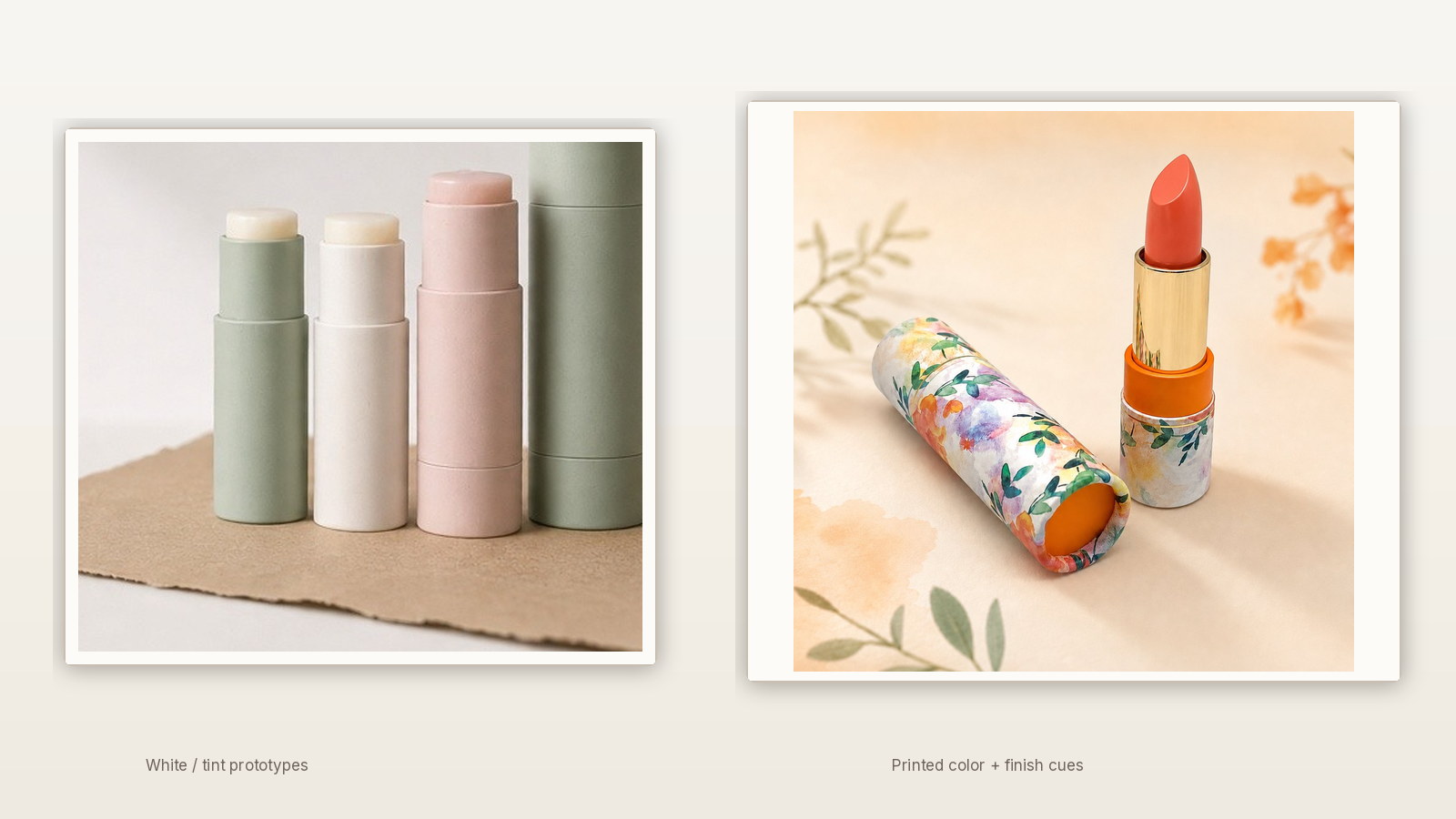
- White / structure sample - confirm diameter, height, fill path, and dispense before investing in full print.
- Filled sample - run the intended formula, closure, and handling conditions; track sample version IDs on every photo and markup.
- Color / finish sample - approve print, coatings, and special paper effects against the same BOM as production.
- Pre-production alignment - freeze BOM, claim wording, artwork version, and inspection criteria in one written pack.
5. Claim-safe language checklist
- If any PP core, PCR-PP base, polymer dust cover, or similar part remains, use plastic-reduction, reduced plastic, paper-led, or hybrid - not plastic-free.
- Reserve “all-paper” for projects where every component (body, mechanism, closure, liner, adhesive) is confirmed without plastic.
- Never state “recyclable everywhere.” Recovery depends on the full stack and local systems.
- Certifications (for example FSC chain-of-custody) belong in documents you can share on request - not as decorative icons invented for a mockup.
6. RFQ send list (copy into your email)
- Brief from section 1
- Target claim language legal will allow
- Preferred sample path (white → filled → color) and qty band
- Destination markets and any document list your counsel already requires
- Ask for: component BOM, current material / chain-of-custody documents for that configuration, sample plan with version IDs, and written confirmation of programme vs sampling clocks
Frequently asked questions
What should a custom paper tube packaging RFQ include at minimum?
Capacity or fill band, formula notes, dispense preference, markets, claim intent, and a request for a component-level BOM plus a sequenced sample plan.
How is this different from a design-and-production overview?
Design-and-production articles explain how tubes are built. This checklist tells buyers what to send and what to gate so quotes and samples stay comparable.
Can we call a paper deodorant tube plastic-free if the outer wrap is paper?
No. Outer wrap alone is not enough. See the hybrid vs all-paper guide and verify the full BOM.
Do sampling days replace mass-production lead time?
No. Keep physical sampling ranges separate from design, digital proof, and mass-production programme tiers.
If you are preparing a custom paper tube packaging RFQ for lip, deodorant, or another stick format, share your brief and claim intent with Nextruct. Get a quote or request a sample to align BOM, samples, and wording before artwork locks.