






How to Choose Eco-Friendly Packaging for Your Business
Start with the job the package must do
There is no single material that makes every package the right environmental choice. For a business, the better question is: what is the lightest, simplest package that still protects the product through filling, storage, shipping, retail, and customer use—and can be handled through a realistic end-of-life route in the markets you serve?
Write a short packaging brief before comparing suppliers. Record the product's dimensions and weight, fragility, moisture or temperature sensitivity, filling or assembly process, shipping route, sales channel, and any customer-use requirements. Separate non-negotiable protection needs from preferences such as appearance, tactile feel, or a particular material.
Use a decision checklist, not a material label
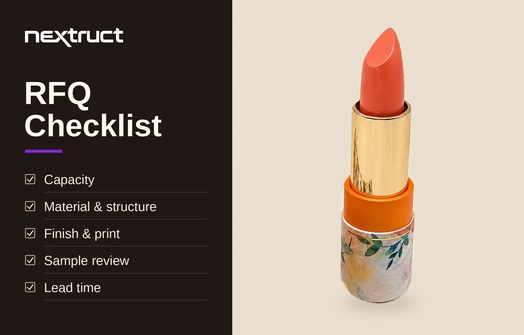
Screen each candidate against the same questions. The table below is a practical starting point for an RFQ and sample review; it is not a substitute for product-specific testing.
| Decision area | Buyer question | Evidence or trial to request | Do not assume |
|---|---|---|---|
| Product fit | What must the package hold, protect, dispense, or present? | Product dimensions and weight, use conditions, and a packed or filled sample where relevant. | That a format suitable for one SKU will work for another. |
| Protection and transport | What handling, stacking, humidity, temperature, or transit conditions matter? | A test plan with agreed conditions and acceptance criteria, plus a shipping trial for the intended route. | That reducing material is beneficial if damage and replacement increase. |
| Size and material use | Can the pack be right-sized without losing necessary cushioning or strength? | A dimensioned sample or drawing; compare empty space and protective components across options. | That a standard size is the lowest-waste choice. |
| Full construction | What are the body, liner, coating, closure, label, ink, adhesive, and tape made of? | A component-level material breakdown and available supplier documentation for the exact configuration. | That a paper exterior means the complete pack is paper-only or plastic-free. |
| End-of-life route | What can customers actually recycle, reuse, or compost where the product is sold? | Disposal guidance for each component and confirmation against the collection systems in target markets. | That a material's technical recyclability guarantees local acceptance. |
| Total cost and delivery | How do unit price, packing, storage, freight, damage, and replacement affect the choice? | Comparable quote assumptions, sample-to-pilot steps, inspection points, and shipment documentation requirements. | That the lowest unit price is the lowest overall cost. |
Compare the whole package, including secondary packaging
Begin with avoidable material and empty space. Right-sizing a shipping box or removing an unnecessary insert can reduce packaging use without asking a new material to do a job it has not been tested for. Then compare the primary pack, protective components, labels, closures, and the outer carton as one system.
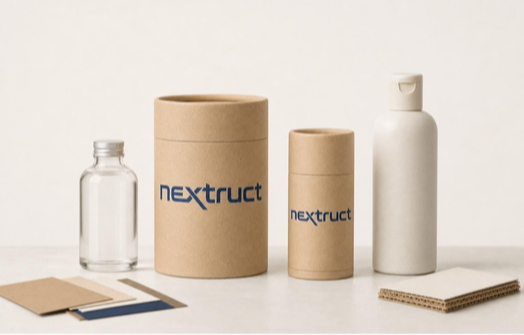
Paper-based formats such as corrugated packs, folding cartons, paper bags, and tubes may be worth evaluating when their structure matches the product and channel. They are not automatic substitutes for every plastic, glass, or metal component: moisture barriers, product-contact requirements, closure function, and shipping performance may change the design. Ask suppliers to describe the exact construction rather than relying on a broad material name.
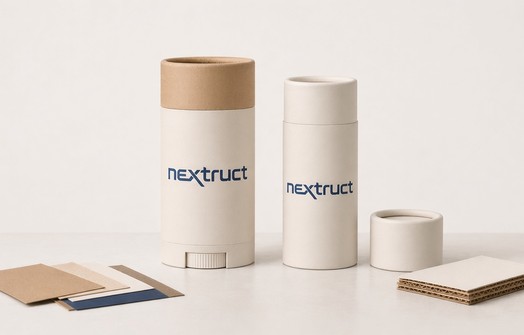
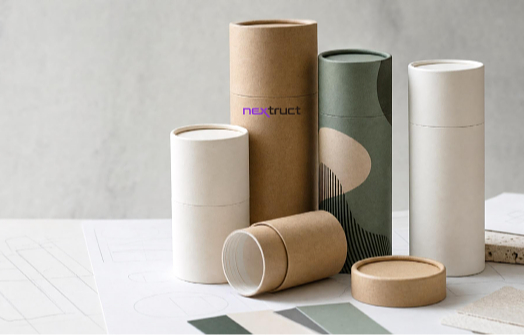
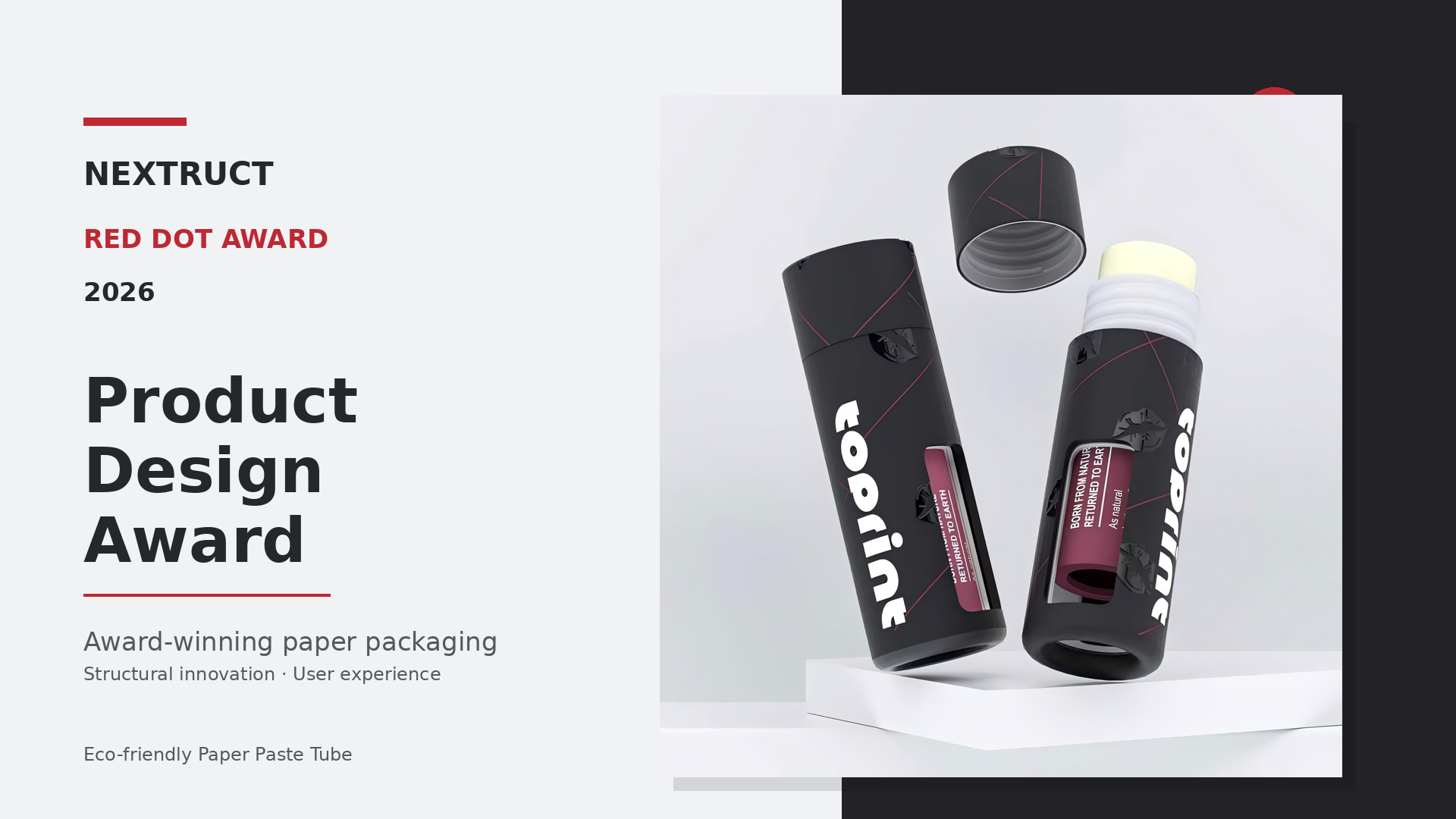
For beauty and personal-care teams, a paper tube or canister can be one format to investigate for a suitable product. Nextruct's public catalog lists push-up paper tubes and canisters, alongside multiple product examples; the precise components, use conditions, and disposal guidance still need confirmation for the selected SKU. See the public paper tube and canister listing.
Verify the disposal path in each market
Recyclable, compostable, and reusable describe different outcomes and require different systems. Before putting any claim into packaging artwork or sales material, identify the intended market and check what collection, sorting, recycling, or composting options are actually available there. Review every component: a pack may combine a paper body with a liner, coating, window, label, adhesive, or closure that changes how it should be handled.
Ask the supplier for the evidence behind the claim and keep it tied to the exact material and construction being quoted. Where a certification or test document is relevant, confirm its scope, holder, validity, and applicability to the specific component; do not treat a document for one input as proof for the entire finished pack. If information is missing, describe the end-of-life route as unverified rather than promising an outcome.
Test before committing to a production specification
A sample review should cover how the package is filled or assembled, how the product fits and functions, how the closure behaves, and how the packed unit withstands the handling conditions that matter to your channel. Agree on test conditions, sample quantity, acceptance criteria, owners, and what happens if a sample fails before a pilot is treated as approval.
For a custom project, keep the specification traceable: drawing or dimensions, component list, approved artwork, sample revision, inspection points, and shipment requirements. This supports clearer conversations about rework, timing, and quality without turning an untested concept into a supplier commitment.
Compare total value, not only material price
Compare quotes on the same assumptions: order quantity, packaging configuration, printing, protective inserts, packing method, storage needs, destination, and freight basis. Then consider the cost of damage, returns, replacement shipments, and extra handling. A lighter or less expensive pack is not a better choice if it creates avoidable product loss or customer friction.
Ask suppliers to identify what is confirmed and what remains project-dependent, including material availability, tooling or setup, sample approval, inspection, and shipping documents. This is especially useful when a packaging change must meet a launch date or support several product variants.
What to include in a supplier RFQ
- Product type, dimensions, weight, fragility, and any moisture, temperature, or product-contact requirements.
- Sales channel, target markets, shipping route, and expected handling conditions.
- Preferred packaging format and the function each component must perform.
- Target fill or pack-out, artwork and print needs, and any required component or material documentation.
- Requested sample, pilot, inspection, and acceptance steps, with owners and target dates.
- Quote assumptions for quantity, components, packing, freight, and the documents required before shipment.
- The exact environmental claim under consideration and the evidence needed to support it in each target market.
A focused RFQ makes options easier to compare and exposes evidence gaps early. The best choice is the package that meets the product brief, uses no unnecessary material, has a credible handling route, and can be validated before the specification is locked.
Frequently asked questions
1. What is the most eco-friendly packaging for a business?
There is no universal answer. The suitable option depends on product protection, pack size, component construction, shipping conditions, and the end-of-life systems available where customers use it. Compare complete package configurations rather than material names alone.
2. Is paper packaging always recyclable?
No. Liners, coatings, windows, labels, adhesives, and closures can affect how a complete pack is sorted or processed. Ask for a component breakdown and verify local acceptance for the exact configuration.
3. What is the difference between recyclable and compostable packaging?
They refer to different end-of-life routes. Recycling depends on collection and processing systems for the material; composting requires appropriate composting conditions and access. Confirm the route and local infrastructure for the specific package rather than treating the terms as interchangeable.
4. How can a business reduce packaging waste without increasing damage?
Measure the product and current pack-out, identify excess space or unnecessary components, then trial a right-sized design under relevant handling and shipping conditions. Keep protection and acceptance criteria in the test plan before approving a material reduction.
5. What documents should I request from a packaging supplier?
Request a component-level material description and the available supporting documents for the claims or requirements relevant to your project. Confirm which product, component, market, and validity period each document covers; the exact document set depends on the package and destination.
6. Can paper tube packaging work for any product?
No. A tube or canister is only a candidate format when its opening, closure, product-contact construction, protection, and use conditions fit the SKU. Review a drawing and sample with the supplier, then verify the full material system and disposal guidance before making a claim.