Leave Your Message
Name*
Phone number*="7">
Email Address*
Country*
Message*
Your Business Types*
Interested Items(Scroll selection)*
0%

Choosing the best Sunscreen Packaging requires more than attractive colors or a glossy finish. The package must protect the formula, support accurate application, and survive real daily use. A tube left in a hot beach bag faces different demands from a pump stored in a bathroom cabinet.

Dr. Zoe Diana Draelos, a respected cosmetic dermatology and product-development expert, has said, “Sunscreen is a drug, not a cosmetic.” Her point changes how we evaluate packaging. Product protection comes first. A suitable container should limit air exposure, reduce contamination, and remain compatible with oils, filters, and preservatives. Material testing matters. A package that looks premium may still weaken, leak, or release unwanted compounds.

Small details affect consumer behavior. A wide opening can encourage excessive dispensing. A controlled pump may provide cleaner, more consistent doses. Clear plastic can improve visibility, but sunlight may affect sensitive formulas. The correct choice depends on the formulation, closure, distribution route, and expected user habits.

Packaging Sunscreen also involves practical sustainability decisions. Lightweight tubes can reduce shipping emissions. Recycled materials may lower virgin plastic use, but they must still meet safety and performance requirements. Recycling labels should reflect real local systems, not marketing optimism.

No package solves every problem. That is worth admitting. A refill system may reduce waste but create hygiene concerns. An airless pump can improve protection but may be difficult to recycle. The strongest selection process tests these trade-offs instead of following trends.

This guide examines barrier performance, dispensing control, user experience, material choices, and supplier reliability. It also asks an uncomfortable question: does the package help people apply enough sunscreen, or merely look responsible on a shelf?
How to Choose the Best Sunscreen Packaging?

Define the Sunscreen Formula, SPF Level, Format, and Use Case

Choosing sunscreen packaging starts with the formula, not the artwork. A fluid chemical formula may need a tight, low-permeability bottle. Mineral formulas can settle, so a wider opening supports shaking and controlled dispensing. Airless pumps reduce repeated exposure to air and fingers. However, compatibility testing must come before aesthetic decisions. ISO 11930 is not sunscreen-specific, but its preservation principles can guide microbial-risk testing. Packaging can look premium and still fail in use. That uncomfortable lesson matters.

SPF level changes the information burden and dispensing behavior. ISO 24444:2019 defines an in-vivo method for measuring SPF. ISO 24443:2021 supports in-vitro UVA assessment. These tests measure protection, but they do not select a package. Higher-SPF products need clear directions, dosage cues, and stable labels. A small tube suits a handbag, but it may encourage under-application. The World Health Organization uses 2 mg/cm² as the testing application level. Consumers rarely apply that amount. Packaging should make this gap visible.

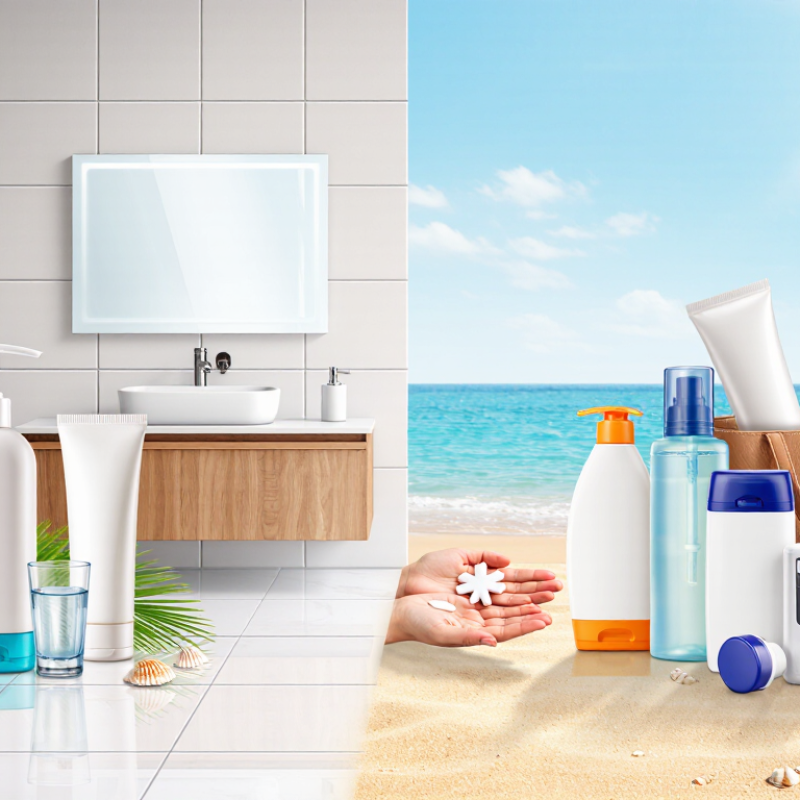
Format must follow the use case. A beach lotion needs a cap that tolerates wet, sandy hands. A facial stick needs smooth dosing and a twist mechanism that will not jam. For children, a pump can limit spills, though small hands may struggle with it. Grand View Research valued the global sunscreen market at about USD 13.3 billion in 2022, with growth projected through 2030. Market growth cannot replace field testing. Test the pack after heat, cold, drops, and repeated opening. I would question recyclable claims unless local systems can process the material.

Match SPF 30–100 Claims to ISO 24444:2019 Testing Requirements

SPF 30, 50, and 100 should begin with evidence, not artwork. ISO 24444:2019 defines an in vivo method for measuring sunscreen’s Sun Protection Factor. Trained laboratories expose protected and unprotected skin to controlled ultraviolet radiation. They then compare the minimum erythema doses. The final SPF value must match the tested formula and application method.

Choose packaging that protects product stability during transport and daily use. Opaque tubes, airless pumps, or UV-resistant bottles can reduce light exposure. However, packaging performance still requires compatibility and stability testing. Show the tested SPF clearly on the front panel. Include batch identification, expiry information, directions, and required warnings. ISO 24444 does not prove water resistance or UVA protection. Separate evidence may be needed. SPF 100 is not automatically twice as protective as SPF 50. The number can look scientifically complete, but it still needs careful regulatory review.

Grand View Research estimated the global sunscreen market at about 13.4 billion US dollars in 2023, with continued growth expected through 2030. Other industry reports provide different estimates, so packaging decisions should not rely on market figures alone. A practical quality file should connect the formula, container, closure, label claim, and ISO 24444:2019 test report. I would also recheck the claim after major packaging changes. Small details matter.

Verify UVA Protection Under ISO 24443:2021 and Regional Standards

How to Choose the Best Sunscreen Packaging?

Sunscreen Packaging should protect the formula before testing even begins. Light, heat, oxygen, and repeated handling can change its performance. Opaque tubes, airless pumps, and well-sealed caps can reduce unnecessary exposure. Choose materials that resist formula interaction, especially with oils, alcohols, and mineral filters. A package may look premium, yet still allow damaging light inside. That detail deserves attention.

UVA performance should be verified through ISO 24443:2021 testing. This standard evaluates UVA protection in vitro by measuring the product’s spectral absorbance. Testing should use representative batches, correct application amounts, and documented laboratory procedures. Review the UVA protection factor, critical wavelength, and photostability results. Packaging cannot prove UVA protection by itself. It only helps preserve the tested formula.

Regional standards may use different claim rules and testing expectations. European requirements can relate UVA protection to measured SPF. Other markets may focus on broad-spectrum performance, critical wavelength, or local labeling rules. Check the destination market before printing claims. Keep batch codes, filling dates, material specifications, and compatibility records accessible. A practical check is simple: place samples under controlled light and inspect color, odor, texture, and pump performance over time. Results can be imperfect. Real distribution conditions are rarely identical to laboratory conditions. A seal that fails after repeated opening should not be ignored. Reliable packaging decisions combine test data, supplier documentation, and cautious review.

Select UV-Resistant Packaging Materials for Formula Stability

How to Choose the Best Sunscreen Packaging?

Select UV-Resistant Packaging Materials for Formula Stability

A sunscreen package does more than hold the formula. It must help protect sensitive filters from light, oxygen, heat, and moisture. Clear plastic may look attractive, but it can increase exposure during storage and daily use. Opaque or UV-blocking materials offer stronger protection. Multilayer tubes, aluminum barriers, and UV-resistant polymers are practical options for Sunscreen Tube Packaging.

Material selection should match the formula, not only the product image. Test the package with the finished sunscreen under heat, light, and humidity. Check color, odor, viscosity, pH, and active-filter performance over time. Watch the shoulder and cap areas closely. Small gaps can invite air and moisture. A tight seal matters.

Barrier strength is only part of the decision. The inner layer must remain compatible with oils, alcohols, emulsifiers, and mineral filters. Some formulas may interact with adhesives or recycled content. That possibility deserves testing. A common mistake is trusting short laboratory results. They may not represent a hot delivery truck or a bathroom windowsill. No package solves every stability concern. Recheck assumptions when the formula changes, even slightly.

Test Compatibility, Migration, Leakage, and Shelf-Life Performance

Choosing sunscreen packaging requires more than attractive shape and smooth dispensing. For Sunscreen Stick Packaging, the container must suit the formula, application method, and storage conditions. Start with compatibility. Apply the product to packaging components and inspect changes over time. Watch for swelling, cracking, softening, discoloration, or altered odor. A slight surface change can signal a deeper material problem.

Migration testing checks whether packaging substances move into the sunscreen. Use suitable laboratory methods and test the finished product, not only raw materials. Pay attention to colorants, adhesives, coatings, and recycled content. Leakage testing should include upright, inverted, and side storage. Add vibration and repeated opening cycles. Small gaps matter. Measure closure torque and inspect seals after each test.

Shelf-life performance needs realistic temperature and humidity exposure. Compare aged samples with fresh controls for texture, scent, weight, and dispensing force. Real users are less predictable. A stick may remain in a hot vehicle, a bathroom, or a travel bag. Accelerated testing helps, but it cannot copy every condition. One weakness in many evaluations is limited real-world handling. I would include drop tests and repeated twisting before approval. A clean laboratory result is useful, but it is not complete evidence. Record every failure, even when it seems minor.

How to Choose the Best Sunscreen Packaging? - Test Compatibility, Migration, Leakage, and Shelf-Life Performance

Packaging Format Typical Material Structure Compatibility Screening Migration Risk Factors Leakage Test Shelf-Life Evaluation Overall Suitability
HDPE Bottle High-density polyethylene bottle with polypropylene cap or pump Generally good resistance to water-based and many oil-in-water sunscreen emulsions; check for softening, swelling, stress cracking, odor, and color change. Potential transfer of low-molecular-weight substances from plastic components, colorants, adhesives, or closures; risk increases with oily formulas and elevated temperature. Invert, side, and upright storage; pressure or vacuum cycling; closure torque verification. No visible product loss or wetting around the closure should be observed. Accelerated storage commonly includes elevated-temperature and freeze–thaw cycles, followed by checks of color, odor, viscosity, pH, emulsion stability, and dispensing performance. High
PP Tube Polypropylene tube with PP cap and heat-sealed or shoulder-sealed tube body Good chemical resistance for many sunscreen emulsions; evaluate hinge, cap fit, seal integrity, whitening, brittleness, and product flow after aging. Migration may originate from pigments, printing inks, coatings, seals, or recycled-content layers; direct contact with the formula requires material-specific assessment. Squeeze, drop, inverted-storage, and seal-strength tests; inspect for pinholes, channel leaks, cap leakage, and seal separation. Monitor package deformation, seal strength, cap function, leakage, and formula stability during real-time and accelerated storage. High
Aluminum-Plastic Laminate Tube Polymer layers with an aluminum barrier layer, polymer shoulder, and PP cap Strong barrier performance; assess internal polymer compatibility, delamination, creasing, seal integrity, and possible corrosion at damaged areas. Barrier layers can reduce permeation, but inks, adhesives, sealants, and exposed metal edges must be assessed for extractables and interaction with the formula. Drop, squeeze, burst, cap-torque, and inverted-storage testing; inspect the laminate for cracks, delamination, and loss of seal integrity. Useful where oxygen, moisture, or light sensitivity is important; verify barrier retention after flexing, shipping simulation, and temperature cycling. High
Airless Pump PP, PE, or multilayer container with piston or collapsible inner system and pump actuator Can limit air exposure, but formula viscosity, particle content, valve geometry, and priming behavior must be verified across the full temperature range. Multiple components increase the number of potential contact materials; evaluate elastomers, lubricants, adhesives, pigments, and spring or valve components. Pump actuation, vacuum retention, transport vibration, drop, orientation, and closure leakage tests; confirm consistent dose delivery after aging. Assess priming, dose weight, number of usable doses, backflow, air ingress, formula oxidation, and pump functionality after temperature cycling. Medium–High
PET Bottle Polyethylene terephthalate bottle with PP or PE closure Good clarity and rigidity; compatibility must be confirmed for formulas containing high levels of oils, solvents, or fragrance materials because stress cracking and permeation can occur. Evaluate acetaldehyde and other potential extractables, colorants, closure materials, and permeation of volatile or aromatic ingredients. Top-load, drop, pressure, inverted-storage, and closure-torque tests; inspect for cracks, paneling, deformation, and leakage. Light exposure, temperature cycling, formula weight loss, odor transfer, and visual stability should be checked when the bottle is transparent or lightly colored. Medium–High
Glass Jar Glass container with polymer liner, threaded cap, and optional spatula or inner seal Glass is highly inert, but the liner, cap, decoration, and seal remain in contact with the formula and require compatibility testing. Primary risks are from polymeric liners, coatings, inks, adhesives, and closure components rather than the glass itself. Drop, thermal-shock, cap-torque, seal, and transport-vibration tests; inspect for breakage, chips, cracks, and leakage at the liner. Excellent barrier against oxygen and moisture, but light protection depends on glass color or secondary packaging; evaluate product exposure after repeated opening. Medium
Metal Aerosol Can Aluminum or steel can with internal coating, valve, actuator, and propellant system Requires formula–coating–propellant compatibility testing, including corrosion, coating adhesion, pressure behavior, spray pattern, and valve performance. Potential migration or interaction from internal coatings, valve elastomers, lubricants, and propellant-contact materials; coating damage can increase risk. Pressure, leak, valve, crimp, drop, and elevated-temperature tests must be performed using the filled and pressurized package. Monitor internal pressure, corrosion, spray rate, discharge pattern, valve function, can deformation, and coating integrity throughout storage. Medium–High
Recommended Qualification Sequence: Screen all formulation-contact materials first, then conduct migration and extractables assessment, package integrity and leakage testing, transport simulation, accelerated stability testing, and finally real-time shelf-life confirmation.
Evaluation Note: Suitability ratings are general material-selection guidance. Final approval should be based on the actual sunscreen formula, all packaging components, intended market requirements, filling process, transport conditions, and documented test results.

Choose Pumps, Tubes, or Sprays for Accurate Dosing and Hygiene

Choosing sunscreen packaging starts with the dose, not the appearance. A pump can deliver a repeatable amount when its chamber is properly calibrated. This helps users cover arms, legs, and shoulders more consistently. It also limits contact between hands and the remaining formula. However, thick creams may clog narrow pump pathways. Testing at different temperatures is essential before selecting a final design. Real bathroom use is less controlled than laboratory testing. That difference matters.

Tubes offer simple control and work well for the face, neck, and small touch-ups. A flip-top cap can reduce spills, but the opening should stay clean between uses. Wide openings may release too much product, especially when the tube is squeezed quickly. Sprays can cover large areas faster during outdoor activities. Yet wind can scatter the mist, and users may apply too little without noticing. A spray package needs clear instructions and a reliable actuator. Users should spray into their hands before applying sunscreen to the face. Avoid the eyes and inhalation. That step is easy to forget.

Tips: Match the package to the formula’s thickness and intended body area. Check dose consistency after repeated opening and closing. Watch for leaks in bags. Ask testers to use wet, rushed, and low-light conditions. Their mistakes often reveal packaging problems that clean trials miss.

Evaluate Recyclability, PCR Content, and Life-Cycle Impact Data

How to Choose the Best Sunscreen Packaging?

Recyclability starts with the local collection system, not a recycling symbol. Check whether nearby facilities accept the container, cap, pump, sleeve, and label together. The OECD Global Plastics Outlook reports that only 9% of plastic waste was recycled globally in 2019. That figure makes practical design essential. A lightweight mono-material tube may perform better than a heavier package with mixed layers. Dark pigments and strong adhesives can also reduce sorting efficiency. Ask for test results, not optimistic claims.

PCR content can reduce demand for virgin plastic, but percentage alone proves little. The package specification should identify post-consumer material, its share by weight, and its verification method. The Association of Plastic Recyclers stresses that recycled content and recyclability are separate design questions. PCR can also change color, odor, stiffness, or barrier performance. Sunscreen Packaging Materials must protect formulas from heat, light, and contamination. A failed package creates waste too. This is where judgment matters.

Life-cycle impact data should compare equal functions, such as one protected 200-milliliter product. Request assumptions for resin production, recycled content, manufacturing energy, transport distance, and end-of-life. ISO 14040 principles support transparent life-cycle assessment and clearly stated boundaries. One supplier’s lower carbon result may exclude the cap or distribution stage. I would question that. Smaller packaging can cut transport emissions, yet excessive thinness may cause leakage. The best choice is rarely perfect; it is the option supported by complete, comparable evidence.

Custom Luxury Glass Perfume Bottles in China: Insights from Grand View Research’s Fragrance Market Report

China’s fragrance market is evolving toward premium, personalized, and visually distinctive products. Insights from Grand View Research’s fragrance market report highlight the importance of packaging in communicating product quality and strengthening consumer appeal. Custom luxury glass perfume bottles offer an effective solution for fragrance sprays, room fragrances, and other premium scent products, helping brands create a refined presentation that matches their market positioning.

Crafted from high-white glass, these bottles provide exceptional transparency and a luxurious appearance, allowing the fragrance inside to become part of the overall design. The thick-bottom construction improves stability while offering a comfortable grip during use. As an experienced factory in China, we support comprehensive customization for caps, sprayers, bottle colors, and surface decoration, enabling each package to reflect a distinctive style, collection, or seasonal concept.

To simplify sourcing and production, complementary paper gift boxes, inserts, labels, and assembly services are also available. This integrated approach helps maintain consistency across every packaging component while supporting efficient project coordination. From elegant minimalism to bold decorative finishes, customized glass packaging can meet the needs of premium fragrance collections, private-label products, hospitality scents, and carefully curated gift sets.

FAQS

How does sunscreen packaging help preserve UVA performance?

Opaque tubes, airless pumps, and tight caps reduce light, heat, oxygen, and handling exposure. Protection starts early. Packaging preserves the tested formula, but it cannot prove UVA performance.

How should UVA protection be verified?

Use ISO 24443:2021 in-vitro testing with representative batches and correct application amounts. Review spectral absorbance, UVA protection factor, critical wavelength, and photostability results. Document the laboratory procedure carefully.

Why must regional standards be checked before printing claims?

Different markets may require different UVA, broad-spectrum, SPF, and labeling evidence. Check the destination market first. Keep batch codes, filling dates, material specifications, and compatibility records available.

What packaging compatibility problems should be tested?

Apply the sunscreen to packaging components and inspect them over time. Look for swelling, cracking, softening, discoloration, or changed odor. A small surface change may signal a deeper problem.

What should migration and leakage testing include?

Test the finished product, including colorants, adhesives, coatings, and recycled content. Store samples upright, inverted, and sideways. Add vibration, repeated opening, and closure-torque checks. Small gaps matter.

How can shelf-life performance be evaluated realistically?

Expose samples to varied temperature and humidity conditions. Compare aged samples with fresh controls for texture, scent, weight, and dispensing force. Include drop tests and repeated twisting. Laboratory results are useful, but incomplete.

What makes sunscreen packaging more recyclable?

Check whether local facilities accept the container, cap, pump, sleeve, and label together. Mono-material designs may sort more easily than mixed layers. Dark pigments and strong adhesives can reduce recycling efficiency. Symbols alone prove little.

How should PCR content and life-cycle data be judged?

Request the post-consumer material percentage, verification method, and performance evidence. PCR may affect color, odor, stiffness, or barrier protection. Compare equal product functions and include caps, transport, manufacturing, and disposal stages. The answer may remain imperfect.

Conclusion

Choosing the right Sunscreen Packaging starts with understanding the formula, SPF level, product format, and intended use. Packaging should support the product’s stability while clearly communicating SPF claims from 30 to 100, backed by appropriate testing under ISO 24444:2019. UVA protection should also be verified according to ISO 24443:2021 and applicable regional requirements, ensuring that the package and product deliver consistent performance throughout their shelf life.

Material selection is equally important. UV-resistant containers can help protect sensitive formulas, while compatibility, migration, leakage, and aging tests confirm safe and reliable performance. Pumps, tubes, and sprays should be evaluated for dosing accuracy, hygiene, ease of use, and resistance to clogging or malfunction. Finally, manufacturers should assess recyclability, post-consumer recycled content, and credible life-cycle data to balance packaging performance with environmental responsibility. A well-designed solution combines protection, usability, compliance, durability, and sustainability.
Isabelle

Isabelle

Isabelle is a seasoned marketing professional at Toprint Nextruct, a technology-driven packaging solutions provider based in China. With a deep expertise in the realm of sustainable packaging, she is dedicated to revolutionizing the industry through innovative, paper-based structures. Isabelle......
Previous China Top Scent Boxes Manufacturers for Global Buyers?