Leave Your Message
Name*
Phone number*="7">
Email Address*
Country*
Message*
Your Business Types*
Interested Items(Scroll selection)*
0%

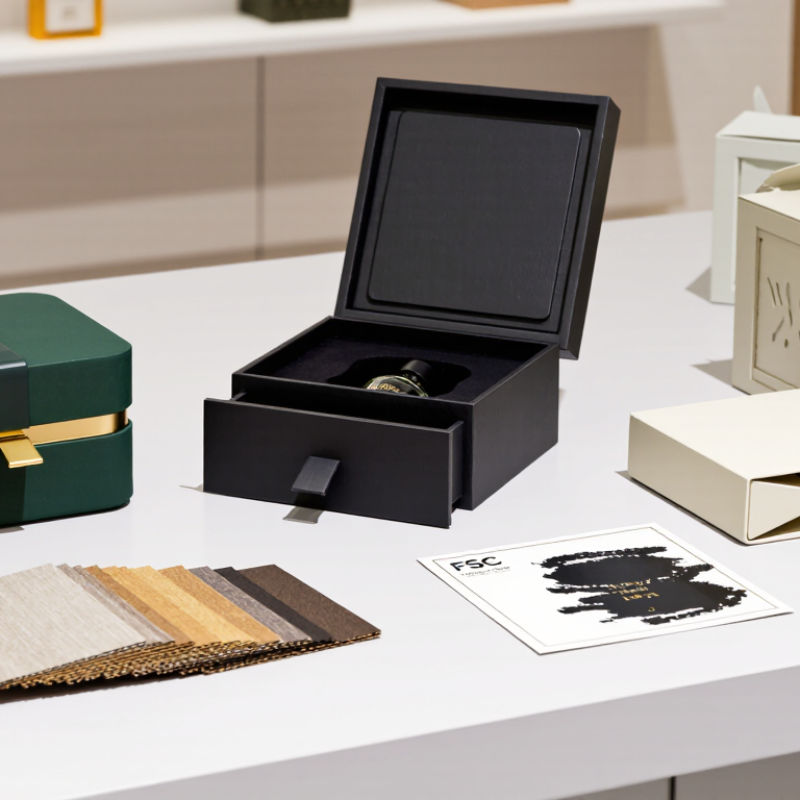
For global fragrance brands, choosing reliable Scent Boxes manufacturers in China takes a lot more than just comparing unit prices. You need a partner who can handle structural design, fragrance protection, print consistency, and export experience all at once. A premium box has to survive warehouse handling, ocean freight, and retail display. And honestly? The small details matter. A loose insert can damage a glass bottle. A weak magnetic closure can kill that first impression before the customer even opens the box.

Packaging consultant Sarah Bennett puts it this way: “The best Scent Boxes balance protection, presentation, and practical manufacturing from the beginning.” That’s a useful point, because pretty samples can hide production weaknesses. Before placing large orders, buyers should look at material thickness, edge finishing, color accuracy, and packaging tests. Ask for a physical prototype—it’s still essential. Digital images just aren’t enough.

China has plenty of capable suppliers, like Guangzhou Topwork Packaging, Shenzhen Fuxin Packaging, and Dongguan Yison Printing. But manufacturer selection shouldn’t be based on names alone. It should depend on verified capacity, communication quality, quality-control procedures, and documented export records. Ask whether the supplier makes rigid boxes, folding cartons, drawer boxes, or custom inserts in-house. And if sustainability matters to your brand’s market position, confirm the use of FSC-certified paper, soy-based inks, and recyclable components.

The process is rarely perfect. Samples may need two or three revisions. Color can shift slightly between proofing and mass production. That’s just reality—and it deserves honest planning, not optimistic promises. This guide looks at China’s leading Scent Boxes manufacturers for global buyers, while also weighing design flexibility, minimum order quantities, lead times, inspection standards, and total landed cost. A cheaper quotation may end up expensive after rework, delays, or damaged products. Reliable decisions start with evidence, careful questions, and direct supplier verification.
China Top Scent Boxes Manufacturers for Global Buyers?

What Are Scent Boxes and Why Do Global Buyers Choose China?

Scent boxes are structured packages for perfumes, fragrance samples, candles, sachets, and related products. They may include molded inserts, paper sleeves, windows, or small compartments. A good box protects delicate containers and controls movement during shipping. It also creates a clear opening experience. Small details matter here.

Grand View Research valued the global fragrance market at approximately USD 50.85 billion in 2023. It projects a 6.2% compound annual growth rate from 2024 to 2030. This expansion increases demand for flexible, attractive scent packaging. Smithers also forecasts the global packaging market will approach USD 1.2 trillion by 2028. Sustainability and e-commerce remain important drivers. China attracts global buyers because many factories combine paperboard converting, offset printing, foil stamping, rigid-box assembly, and insert production. This integrated supply chain can reduce coordination time and support custom orders.

Experienced buyers still inspect more than photographs. They request material samples, compression tests, color references, and documented quality procedures. FSC-certified paper and water-based coatings may support sustainability goals, but certification should be verified. China is not automatically the best choice. Some suppliers may overlook scent compatibility, insert accuracy, or export packaging strength. Clear drawings and pre-production samples reduce those risks. A practical specification should state dimensions, board thickness, tolerances, finish, packing method, and inspection standards. Even then, packaging can fail during humid transport. That possibility deserves honest testing.

How China’s Scent Box Manufacturing Industry Is Organized

China’s scent box manufacturing industry is organized around specialized production clusters. Packaging designers, paperboard mills, printing houses, and finishing workshops often operate within the same region. This structure shortens transport time and speeds up sampling. A buyer may discuss dimensions with one supplier, then receive inserts from another approved partner. Coordination matters.

Most factories follow a layered workflow. A technical team checks dielines, folding angles, magnet placement, and bottle protection before production. Purchasing teams source paper, adhesives, ribbons, and protective coatings. Production supervisors monitor color accuracy and edge quality. Independent inspectors may verify carton strength, surface defects, and packing quantities before shipment. Photos, sample records, and batch codes improve traceability.

Sustainability is becoming more practical, not merely decorative. Eco-Friendly Scent Boxes may use recycled board, water-based coatings, paper inserts, and reduced plastic components. However, “green” claims still require evidence. Material certificates, recycled content records, and clear disposal guidance should be requested. Some suppliers provide strong samples but weaker volume control. That gap deserves attention.

The industry is efficient, but not flawless. Humidity can warp paper during storage. Small changes in bottle weight may affect insert stability. Experienced buyers usually approve a production sample under real handling conditions. They also define tolerances in writing. A reliable supplier welcomes these checks, even when they slow the order slightly.

Key Types of Scent Boxes Made by Chinese Manufacturers

Chinese manufacturers produce several scent box types for global buyers, each serving a different product and retail setting. Rigid scent boxes use thick paperboard, clean edges, and stable magnetic or ribbon closures. They suit premium perfume bottles, candle sets, and gift collections. Folding cartons cost less and ship efficiently, while printed interiors can hold product information and usage guidance.

Drawer-style boxes create a slower opening experience. Their inner trays can include molded pulp, paper inserts, or adjustable dividers. These details help prevent glass movement during transport. For smaller items, tube boxes and compact tuck-end cartons offer practical protection. The Scent Box may also use layered compartments for sample vials, sachets, or solid fragrance products. Foam is sometimes useful, but recyclable paper structures may better support sustainability goals.

Experienced buyers should request material samples before placing a large order. Check the box after repeated opening, light compression, and short-distance shipping. A beautiful prototype can still develop loose corners or weak inserts. Not every attractive sample deserves approval. Manufacturers may provide paper certificates, color proofs, and production inspection records, but buyers should verify their relevance to the destination market. Clear dimensions, closure strength, coating choices, and recycling requirements reduce misunderstandings. Small printing shifts are possible, especially across large runs. That deserves honest discussion before production begins.

Chinese manufacturers commonly produce folding cartons, rigid setup boxes, corrugated mailer boxes, and paper tubes for fragrance packaging. The chart shows representative midpoints of commonly specified paperboard weight ranges used for these box structures. Actual specifications vary according to bottle weight, protection requirements, printing, and finishing.

How to Evaluate China’s Scent Box Suppliers

Evaluating China’s scent box suppliers requires more than comparing quotations. Grand View Research valued the global fragrance market at about USD 50.85 billion in 2022. That growth increases pressure on packaging consistency and delivery speed. Request a physical sample before discussing large orders. Check board thickness, color accuracy, insert movement, and whether the lid closes without crushing the corners. Samples matter. A practical audit should review production records, quality-control procedures, worker safety, and export experience. Ask for ISO 9001 evidence when available, plus FSC certification if responsibly sourced paper is important. Do not accept copied certificates without verification.

Packaging performance also needs measurable testing. Smithers identifies sustainability, lightweighting, and improved barrier performance as major packaging development priorities. Ask suppliers for paper specifications, coating details, compression results, and moisture resistance data. For scented products, confirm that inks, adhesives, and coatings will not absorb or distort the fragrance. A small trial order can reveal weak gluing, uneven foil, or poor carton tolerance. Numbers can mislead. Compare the delivered cost, not only the factory price. Include tooling, inspection, inland transport, export packing, and replacement rates. Use a written specification sheet with photographs and acceptable defect limits. Search terms such as Scent Box Com may produce leads, but they do not prove capability. I would score communication, sample accuracy, capacity, compliance, and corrective-action speed separately. Some evaluations still rely too heavily on polished catalogs; that is a weakness worth correcting before signing a supply agreement.

China Top Scent Boxes Manufacturers for Global Buyers? - How to Evaluate China’s Scent Box Suppliers

Practical supplier-evaluation framework for perfume, candle, diffuser, and other fragrance-product packaging. The benchmarks below are indicative buyer requirements and should be confirmed against the final specification, destination market, and purchase contract.

Evaluation Dimension What Global Buyers Should Request Indicative Benchmark or Requirement Evidence to Verify Warning Sign
Product Scope Confirm experience with rigid boxes, folding cartons, magnetic closures, inserts, sleeves, and fragrance-product packaging. Supplier should provide technically comparable samples rather than only general packaging photographs. Sample book, production photos, material specification sheets, and references for similar box structures. Portfolio shows attractive images but no evidence of comparable structures or inserts.
Paperboard and Structure Request board grade, thickness, flute type where applicable, liner material, and load-bearing information. Common rigid-box greyboard constructions use approximately 1.2–2.5 mm board, but the correct thickness depends on box size, product weight, and stacking conditions. Material declaration, caliper measurement, compression or drop-test results, and approved pre-production sample. Supplier cannot identify board thickness, recycled content, or the structure used in the quotation.
Surface Finishing Define print process, color reference, coating, foil, embossing, debossing, varnish, and acceptable visual tolerance. Color should be approved using a physical press proof or signed production sample; digital screen colors are not a reliable final reference. Signed artwork, color proof, finishing sample, and inspection checklist covering scuffing, pinholes, wrinkles, and misregistration. Quotation promises “perfect color matching” without defining a reference standard or inspection tolerance.
Fragrance and Material Compatibility Check whether the box, coating, adhesive, foam, and insert can contact or be stored near oils, alcohol-based perfumes, wax, or diffuser liquids. Packaging materials should be evaluated for odor transfer, staining, migration, softening, and adhesive failure under the intended storage conditions. Material safety documentation, compatibility test plan, retained samples, and results after humidity and temperature exposure. Strong paper, ink, solvent, or adhesive odor is present in samples, or the supplier refuses compatibility testing.
Regulatory Documentation Identify destination-market requirements for inks, coatings, adhesives, recycled content, and restricted substances. For European shipments, confirm whether REACH-related substance information is relevant. Food-contact or children’s-packaging requirements should not be assumed unless applicable. Supplier declarations, third-party laboratory reports, safety data sheets where applicable, and traceable material records. Supplier provides an undated certificate with no matching material, product code, or laboratory details.
Sustainability Claims Request the exact percentage and source of recycled or responsibly sourced fiber, plus information on coatings, magnets, plastics, and recyclability. FSC certification applies to certified forest-based material and requires a valid chain of custody; it does not automatically certify the entire finished box. Valid certificate scope, chain-of-custody details, recycled-content declaration, and component-level bill of materials. Terms such as “green,” “eco,” or “biodegradable” are used without measurable definitions or supporting documents.
Minimum Order Quantity Ask for MOQ by box size, artwork, color, finishing process, and component. Confirm whether mixed quantities are allowed. MOQ is usually higher for custom rigid boxes and special finishing than for standard folding cartons; obtain a written quantity-price ladder. Formal quotation showing tooling, sampling, unit price, packaging, and surcharge assumptions at each volume level. The lowest quoted price is only available at an undisclosed quantity or excludes essential components.
Lead Time and Capacity Separate artwork approval, prototype, material purchasing, production, inspection, and export transit time. A practical planning schedule should show each stage separately; production time can change with box complexity, order quantity, peak season, and imported components. Capacity plan, production schedule, order-tracking process, and written delay-escalation procedure. Supplier gives a single delivery date but does not explain approval deadlines, capacity limits, or delay responsibility.
Quality Control Agree inspection points for dimensions, assembly, color, surface defects, magnets, inserts, odor, quantity, and carton protection. AQL 2.5 for major defects and AQL 4.0 for minor defects are commonly used buyer-set sampling levels, not universal legal requirements. Approved inspection standard, inspection report, defect photos, sampling record, and corrective-action report. Quality is judged only by visual inspection, with no agreed tolerances or documented corrective action.
Sample Approval Require a production-representative sample before mass production and define which characteristics are locked after approval. The approved sample should include the actual board, paper, coating, hardware, insert, printing, and assembly method whenever practical. Signed sample approval form, dated photographs, technical drawing, and retained reference sample. Mass production begins from a digital rendering or an unrelated stock sample.
Packaging and Export Protection Specify inner protection, master-carton dimensions, carton strength, palletization, moisture protection, and shipping marks. Packaging should prevent crushing, abrasion, moisture damage, and movement during handling; carton limits must be checked against the chosen transport method. Packing specification, carton drop or compression test where relevant, loading photographs, and shipping-mark approval. Finished boxes are packed loosely, with no moisture barrier or documented transport-protection method.
Commercial Transparency Compare tooling, sampling, printing plates, molds, freight, duties, inspection, payment terms, and replacement policy separately. A comparable quotation should use the same dimensions, materials, finishing, quantity, Incoterm, and delivery destination for every supplier. Itemized quotation, pro forma invoice, Incoterm, payment schedule, validity period, and written defect-replacement terms. The quote is materially lower because specifications, freight, tooling, or inspection costs are omitted.
Supplier Verification Confirm legal identity, manufacturing location, export capability, subcontracting policy, and responsible quality contact. Verify that the quoted entity, bank-account holder, factory, contract party, and certificate holder are consistent or clearly explained. Business registration information, factory audit, video inspection, production address, contract documents, and independent pre-shipment inspection. The supplier avoids factory verification, changes payment details unexpectedly, or cannot explain subcontracted processes.
Recommended decision rule: Select the supplier with the strongest combination of verified capability, material transparency, repeatable quality controls, realistic lead time, and total landed cost—not simply the lowest unit price.

Materials, Customization, and Production Standards to Compare

China’s scent box manufacturers serve global buyers with varied materials, finishes, and production capabilities. Rigid paperboard offers a premium feel and protects glass bottles well. Folding cartons reduce shipping volume and suit larger production runs. Recycled paper can support sustainability goals, but its texture may limit fine printing.

Customization should cover dimensions, inserts, magnetic closures, foil stamping, embossing, and protective coatings. Request a physical sample before approving mass production. Check whether the bottle sits firmly inside the insert. A loose fit can cause damage during transport.

Color matching also deserves attention, especially for dark backgrounds and metallic details. Digital samples often look cleaner than finished boxes. That difference should not be ignored.

Tips:

Ask for material specifications, tolerance ranges, coating details, and test reports. Relevant quality systems and packaging safety documents should be reviewed, not simply accepted by email. Production standards may include color consistency, edge alignment, compression strength, and drop testing. A reliable factory should explain its inspection process and provide photos or records from production. Still, no supplier is perfect. Even an approved sample can reveal small defects in a long run, so independent inspection may be worthwhile. Clear artwork files, signed samples, and written acceptance standards reduce avoidable disputes.

Ordering, Quality Control, and International Shipping Considerations

Selecting China top scent box manufacturers requires more than comparing unit prices. Request a Deluxe Scent Box sample with the final paper, insert, ribbon, and print colors. Check odor transfer after 48 hours. A pleasant fragrance should not hide weak glue or crushed corners. The World Bank’s 2023 Logistics Performance Index highlights customs efficiency and shipment reliability as key trade factors. Ask suppliers for carton dimensions, gross weight, HS classification, and production lead time before placing an order.

Quality control should be visible and repeatable. Use an approved sample, written tolerances, and a pre-shipment inspection. Check 10 boxes from different cartons, not one perfect unit. Measure edge alignment, color variation, surface scratches, and closure strength. For scented packaging, request material safety documents and fragrance compliance information. IFRA Standards provide widely used guidance for fragrance safety, but the buyer still must verify destination-market requirements. Reports are useful. They are not a substitute for testing.

Tips: Keep a golden sample in your office. Photograph every defect beside a ruler. Use moisture-resistant outer cartons for humid routes. The International Maritime Organization notes that more than 80% of global trade moves by sea, so ocean shipping may reduce cost but extend exposure to moisture and handling. Air freight is faster, yet dimensional weight can surprise you. I learned this the hard way. A smaller box can still become expensive when inserts create empty volume. Review insurance terms, inspection timing, and delivery duties in writing. Forecast seasonal delays, especially around factory holidays. No checklist is perfect. Revisit it after each shipment.

FAQS

What is a scent box?

A scent box packages perfumes, fragrance samples, candles, or sachets. It may include inserts, sleeves, windows, or small compartments. The insert should hold each container firmly. Small details matter.

Why do global buyers consider Chinese suppliers?

Many factories combine paperboard converting, printing, finishing, and insert production. This integrated process can reduce coordination time. It may also support flexible custom orders. However, China is not automatically the best choice.

What should buyers check before placing a large order?

Request physical samples before approving production. Check board thickness, color accuracy, insert movement, and lid alignment. The lid should close without crushing corners. Samples matter.

Which materials are commonly used for scent boxes?

Rigid paperboard offers a premium feel and protects glass containers. Folding cartons reduce shipping volume for larger orders. Recycled paper supports sustainability goals, but its texture may affect printing. Material choice involves compromises.

What customization options are available?

Buyers can request custom dimensions, inserts, magnetic closures, foil details, embossing, and protective coatings. A bottle should sit securely inside its insert. Loose inserts may allow movement during transport. That defect becomes expensive.

How can buyers evaluate printing and finishing quality?

Compare finished samples with approved color references. Inspect dark backgrounds, metallic details, edge alignment, and coating consistency. Digital previews often look cleaner than finished boxes. That difference is easy to miss.

What quality tests should scent box suppliers provide?

Ask for compression, drop, moisture resistance, and packaging strength results. Review paper specifications, coating details, tolerances, and inspection records. Test fragrance compatibility carefully. Inks, adhesives, or coatings may affect the scent.

How can buyers reduce delivery and packaging risks?

Use a written specification covering dimensions, materials, tolerances, packing, and defect limits. Include tooling, inspection, inland transport, export packing, and replacement costs. A small trial order may reveal weak glue or uneven finishing. Humidity can still cause failures.

Conclusion

Scent Boxes are designed to present, protect, and organize fragrance products, making them valuable for retail, promotional, subscription, and gift applications. Global buyers often consider Chinese manufacturers because they can offer broad production capacity, flexible customization, competitive pricing, and access to diverse materials and packaging solutions. China’s industry includes factories specializing in rigid boxes, folding cartons, magnetic closures, drawer-style packaging, and custom sets, allowing buyers to select suppliers according to product size, design goals, order volume, and target market.

When evaluating suppliers, buyers should review manufacturing experience, sample quality, communication, production capabilities, and quality-control procedures. Important comparisons include paperboard, specialty paper, fabric, inserts, printing, finishing, structural design, and sustainability options. Clear specifications, approved samples, inspections, and documented production standards can help reduce errors. Buyers should also confirm minimum order quantities, lead times, payment terms, packaging for transport, export documentation, and shipping arrangements. A reliable sourcing process balances appearance, durability, cost, compliance, and delivery performance.
Alexander

Alexander

Alexander is a dedicated marketing professional at Toprint Nextruct, a technology-driven packaging solutions provider based in China. With a deep expertise in paper-based structure research and development, he plays a crucial role in promoting the company’s high-value, sustainable packaging......
Previous 10 Best Sunscreen Packaging Solutions for Global Buyers?